HydraFacial vs Regular Facial: Which One Does Your Skin Actually Need?
Everyone wants glowing, healthy skin. And facials are one of the most popular ways to get there. But walk into any clinic in Delhi today and you will find at least two options on the menu — a regular facial and a HydraFacial. Both promise better skin. Both take roughly the same time. But they are not the same thing.
This is one of the most common questions patients ask at RS Skin and Hair Transplant Clinic in Rohini. And honestly, the answer depends entirely on what your skin actually needs.
Let us break it down.
What Is a Regular Facial — And What Does It Really Do?
A regular facial is a classic skincare treatment. It typically includes cleansing, steaming, exfoliation, blackhead extraction, a face massage, and a mask. It feels relaxing, improves blood circulation, and gives your skin a temporary refresh.
It works well for basic maintenance. Your skin feels softer and brighter for a few days — and then it gradually returns to its usual state.
That is not a criticism. For someone with generally healthy skin and no specific concern, a regular facial does its job. The issue is when people expect it to solve deeper problems — pigmentation, clogged pores, dehydration, or dull skin that just will not respond to anything.
What Is a HydraFacial — And Why Is Everyone Talking About It?
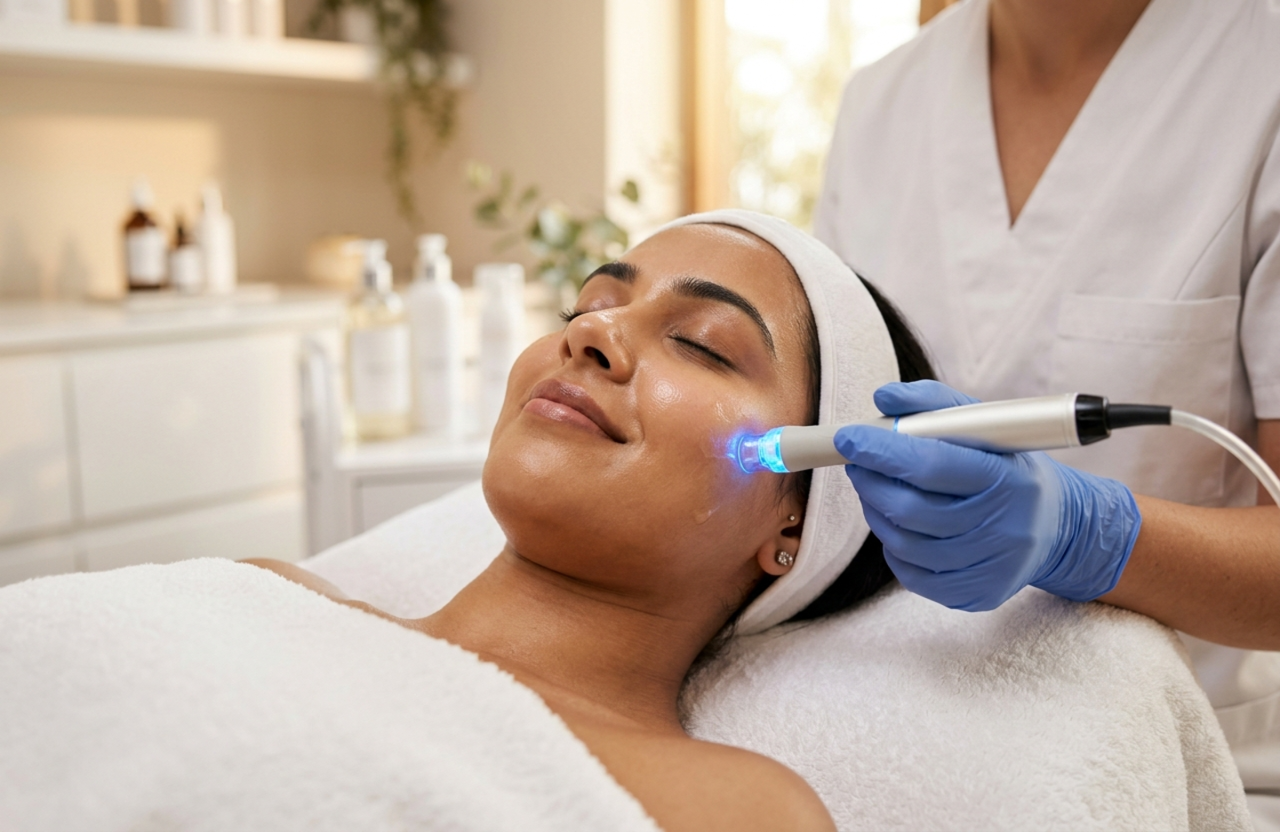
A HydraFacial is not a facial in the traditional sense. It is a medical-grade skin treatment that uses a patented device to cleanse, exfoliate, extract, and infuse serums into the skin — all at the same time.
The procedure works in steps. First, a gentle peel removes dead skin cells and opens the pores. Then painless suction clears out blackheads and impurities while hydrating serums are delivered into the skin simultaneously. Finally, antioxidants, peptides, and hyaluronic acid are infused deep into the skin for lasting nourishment.
What makes it different is that the serums are chosen based on your specific skin concern. Someone with pigmentation gets different boosters than someone with acne or dry skin. That level of personalization simply does not exist in a regular facial.
The entire session takes 30 to 45 minutes. There is zero downtime. You can come in during lunch and go straight back to work.
The Differences That Actually Matter
The biggest difference is depth. A regular facial works on the surface. A HydraFacial works deeper — it removes impurities while pushing nutrients into the skin at the same time. You are not just cleaning. You are actively treating.
Results also last very differently. A regular facial gives a temporary glow. A HydraFacial delivers visible improvement in texture, hydration, and clarity that holds for weeks.
For people with sensitive skin, HydraFacial is actually gentler than a regular facial. There are no harsh scrubs or manual extractions that can cause redness or breakouts after the session.
Who Should Choose a Regular Facial?
A regular facial makes sense if your skin is generally healthy with no specific concerns. If you want a relaxing experience more than a clinical result, or if you are simply maintaining already-good skin between professional treatments — a regular facial is perfectly fine.
Who Should Choose a HydraFacial?
A HydraFacial is the better choice if you have visible pigmentation or dark spots, if your skin feels constantly dehydrated or dull despite your regular routine, if you have oily acne-prone skin with clogged pores, or if you want a real visible result and not just a temporary glow.
It is also the ideal choice if you have an event coming up and want your skin to look its best. Most people see an immediate difference after a single session.
How Often Should You Get a HydraFacial?
For general maintenance and glow, once a month works well. For specific concerns like pigmentation or acne, sessions may be recommended closer together initially — typically every two to three weeks — before moving to a monthly schedule.
At RS Skin and Hair Transplant Clinic in Rohini, Dr. Gunjan Aggarwal creates a personalized plan based on your skin type and goals. Nothing is standardized. What your skin needs is what gets recommended.
Why Getting It Done at the Right Clinic Matters
Many people have tried HydraFacials at beauty parlors or general wellness centers and felt disappointed. The most common reason is that the wrong serums were used — either because no proper skin assessment was done or because the equipment was not medical-grade.
A HydraFacial done correctly, with the right boosters for your skin, feels and looks very different from one that is not. The difference is in the consultation before the procedure — not just the procedure itself.
When Should You See a Skin Specialist?
You should consider a proper skin consultation if your skin feels dull despite trying multiple products, if your facials are giving you only temporary results, if you have pigmentation or uneven tone that is not responding to anything, or if you want a treatment that is actually customized to your skin.
Trying random treatments without understanding your skin type is one of the most common reasons people do not see results.
Final Thoughts
Both treatments have their place. But if your skin is asking for more than a surface-level clean — a HydraFacial is worth it.
The best decision you can make is to get a proper skin consultation before choosing any treatment. Not based on what a friend recommended. Not based on what looked good on social media. Based on what your skin actually needs.
That is exactly the approach followed at RS Skin and Hair Transplant Clinic in Rohini — and that is why so many patients in Delhi see real, lasting results.