How Hair Transplant Graft Placement Creates Natural Results
How Hair Transplant Graft Placement Creates Natural Results
Hair transplantation has become one of the most effective and permanent solutions for hair loss. However, many people believe that simply transplanting a large number of grafts guarantees the best outcome. In reality, the true secret behind a successful hair transplant lies in how the grafts are placed, not just how many are transplanted.
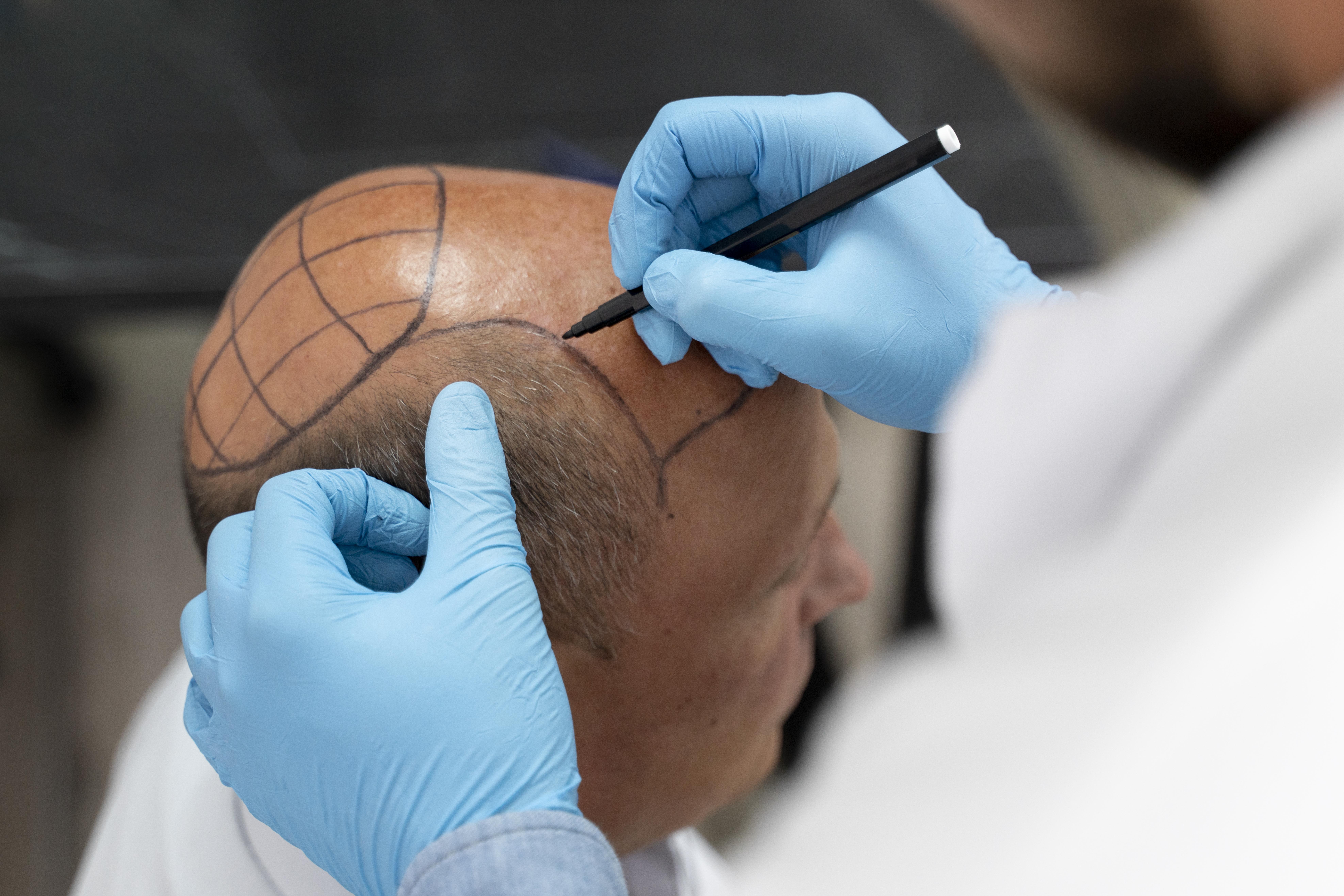
A well-planned hair transplant should restore your hair in a way that looks completely natural. People should notice your improved appearance—not your surgery. This is why experienced surgeons pay close attention to hairline design, graft angle, density, direction, and placement.
At RS Skin & Hair Clinic, every procedure is carefully planned by an experienced hair transplant doctor Delhi patients trust for creating natural-looking results. The focus is always on achieving a balanced, age-appropriate hairline that complements your facial features rather than simply filling bald areas.
Why Graft Placement Matters More Than the Number of Grafts
One of the biggest misconceptions about hair transplantation is that more grafts always mean better results.
Imagine planting thousands of healthy trees randomly in a garden. Even though the trees are healthy, the garden would still look unorganized. The same principle applies to hair transplantation.
Each graft contains one to four hair follicles. Every graft must be placed at the correct:
- Angle
- Direction
- Depth
- Spacing
- Density
If these factors are ignored, even a transplant using thousands of grafts may appear unnatural.
On the other hand, when every graft is strategically positioned, the transplanted hair blends perfectly with your existing hair, making it almost impossible to tell that you've undergone a procedure.
Understanding Hair Grafts
A hair graft is a naturally occurring group of hair follicles extracted from the donor area, usually the back or sides of the scalp.
Different grafts contain different numbers of hairs:
- Single-hair grafts
- Double-hair grafts
- Triple-hair grafts
- Four-hair grafts
Each type serves a different purpose.
For example, single-hair grafts are ideal for designing the front hairline because they create a soft and natural transition. Multi-hair grafts are placed behind the hairline to provide better volume and density.
Proper selection and placement of these grafts are what create a realistic appearance.
The Science Behind a Natural Hairline
The hairline is the first thing people notice after a hair transplant.
An artificial-looking hairline immediately reveals that a person has undergone surgery. A natural hairline, however, blends seamlessly with the rest of the hair.
Creating a natural hairline requires years of experience because every face is different.
A skilled surgeon considers:
- Face shape
- Forehead size
- Age
- Hair thickness
- Existing hair pattern
- Future hair loss
- Ethnicity
- Natural facial proportions
Instead of drawing a perfectly straight line, experienced surgeons create a slightly irregular hairline because natural hairlines are never perfectly symmetrical.
This small detail makes a remarkable difference in the final result.
Hair Direction Is Just as Important
Every hair on your scalp grows in a specific direction.
The hair at the temples grows differently from the crown. Hair at the front points differently from hair near the sides.
If transplanted grafts are inserted in the wrong direction, the hair may stand upright or grow awkwardly.
Natural-looking results depend on replicating the original growth pattern of your hair.
An experienced best hair transplant doctor in Delhi NCR understands these subtle differences and carefully places every graft according to your natural hair growth.
Correct Angle Makes All the Difference
Another critical factor is the angle at which every graft is implanted.
Hair naturally emerges from the scalp at very shallow angles.
If grafts are placed too vertically, the transplanted hair can appear unnatural and become difficult to style.
Different regions of the scalp require different implantation angles.
For example:
Frontal Hairline
Hair is placed at a very low angle to create softness.
Mid Scalp
The angle gradually changes to maintain natural flow.
Crown Area
The angle follows the natural spiral pattern of hair growth.
These small technical details often determine whether the final result looks completely natural or obviously transplanted.
Creating Natural Density
Many patients ask for maximum density in a single session.
While density is important, excessive packing can reduce blood supply to newly implanted grafts.
An experienced surgeon carefully balances:
- Existing hair
- Scalp condition
- Donor availability
- Blood circulation
- Long-term hair planning
Instead of overcrowding grafts, they distribute them scientifically to create the illusion of fuller hair while ensuring healthy graft survival.
This approach delivers long-lasting and natural-looking results.
Matching Existing Hair
One of the biggest challenges in hair transplantation is blending transplanted hair with existing hair.
Every person has unique:
- Hair thickness
- Curl pattern
- Hair colour
- Growth direction
- Hair texture
Successful graft placement ensures that the transplanted follicles match the surrounding hair naturally.
This careful blending prevents visible differences between transplanted and original hair.
Planning for Future Hair Loss
Hair transplantation is not just about today's appearance.
A skilled surgeon always considers future hair loss.
If grafts are placed without planning, further hair thinning can create unnatural patches over time.
At RS Skin & Hair Clinic, every treatment plan is designed with long-term results in mind.
The transplant is planned to maintain a natural appearance even if additional hair loss occurs years later.
This forward-thinking approach helps patients enjoy results that continue to look balanced as they age.
Why Experience Matters
Hair transplantation combines medical science with artistic skill.
Two surgeons may transplant the same number of grafts using identical techniques, yet achieve completely different outcomes.
The difference lies in experience, planning, and attention to detail.
Choosing an experienced hair transplant doctor Delhi patients can rely on significantly improves the chances of achieving a natural-looking result.
The surgeon's understanding of facial aesthetics, hair growth patterns, and graft placement plays a crucial role in the overall success of the procedure.