Hair Transplant Recovery: What to Expect Week by Week
One of the most common reasons people delay a hair transplant — even after deciding they want one — is not knowing what recovery actually looks like.
What will my scalp look like the day after? When can I go back to work? When will I see results? What is normal and what should I be worried about?
These are completely valid questions. And the honest answer is that hair transplant recovery is much more manageable than most people expect — but only when you know what is coming.
Here is a clear, week by week guide to what actually happens after a hair transplant — based on what patients at RS Skin and Hair Transplant Clinic in Rohini genuinely experience.
The Day of the Procedure — What Happens First
Before talking about recovery, it helps to understand what the procedure involves so the recovery makes sense.
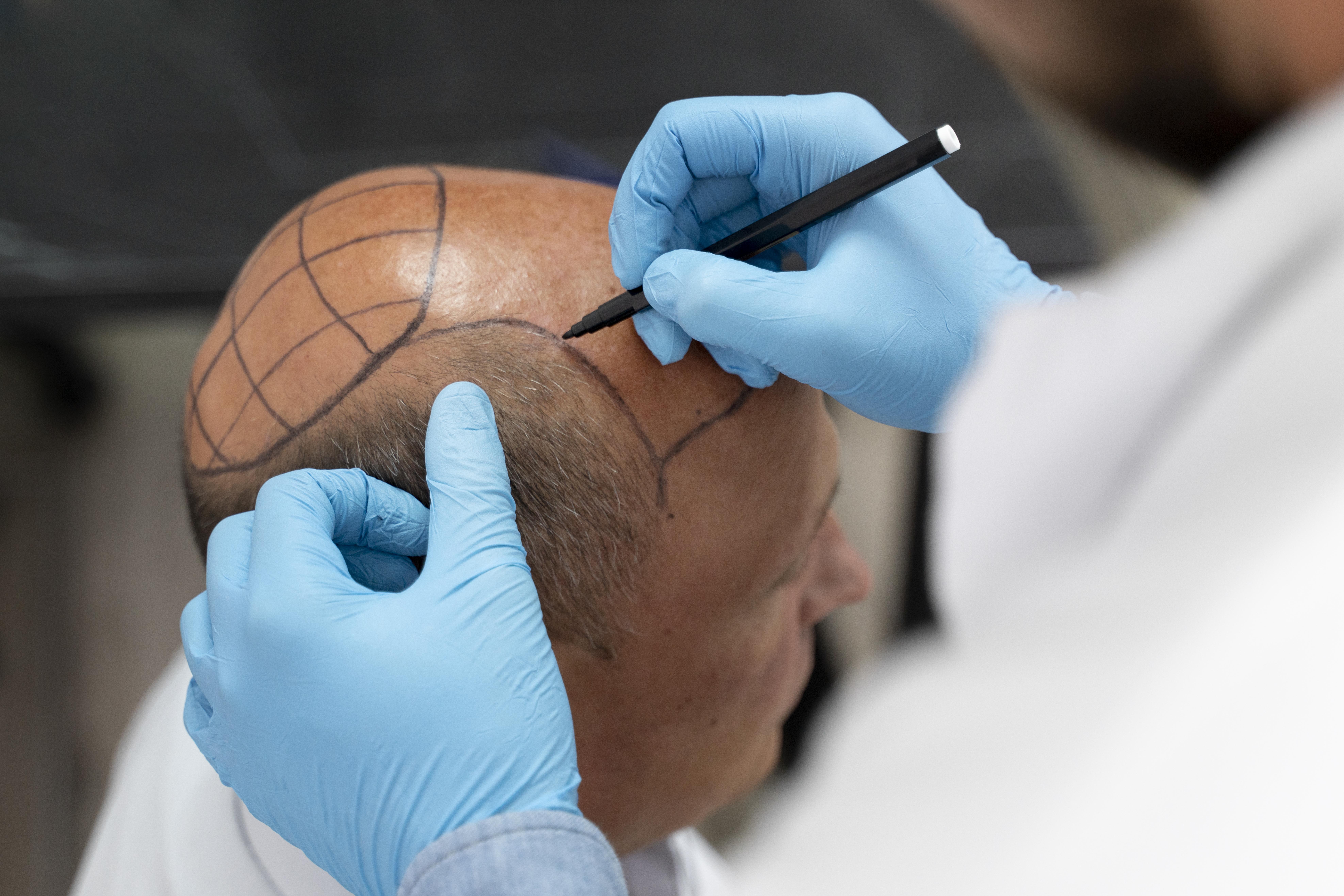
In an FUE hair transplant in Delhi, individual follicles are extracted one by one from the donor area — typically the back of the scalp — and implanted into the recipient area where hair is thinning. The entire procedure is done under local anesthesia. You are awake throughout but feel no pain — just mild pressure at various points.
Depending on the number of grafts, the procedure takes four to eight hours. After it is complete, the scalp is cleaned and you go home the same day. There is no hospital stay.
The scalp will look red and slightly swollen. This is completely normal and expected.
Week 1 — The Most Important Week
The first week is the most critical for graft survival and is when most of the post-procedure care instructions matter most.
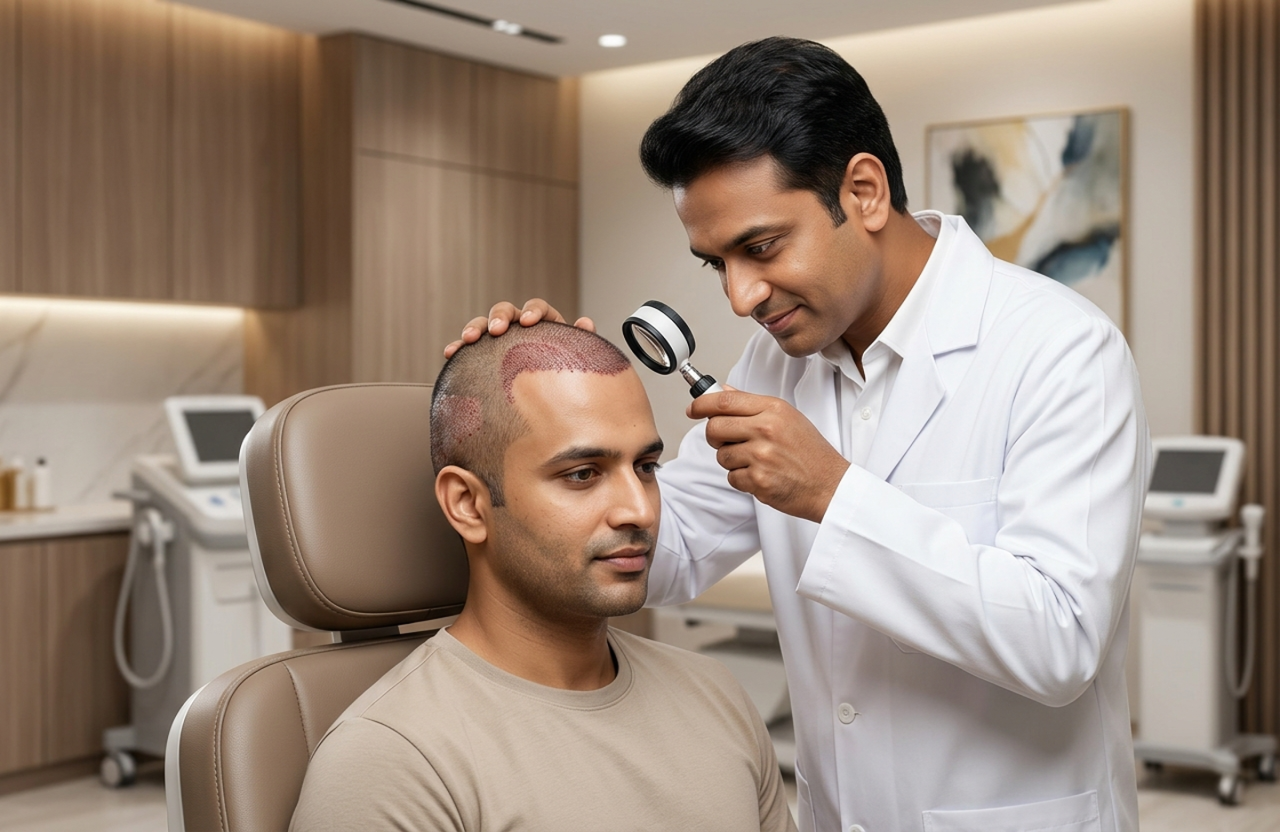
In the first two to three days the scalp looks its most dramatic — redness, mild swelling, and small scabs forming around each transplanted follicle. The swelling sometimes moves down toward the forehead and around the eyes by day two or three. This is normal, temporary, and resolves on its own.
Sleeping with your head elevated during the first few nights reduces swelling significantly.
The transplanted grafts are not yet anchored securely in the first few days. This means no touching, no scratching, no rubbing the recipient area under any circumstances. Even gentle contact can dislodge a graft that has not yet anchored.
By the end of the first week, small scabs have formed around each graft site. These will begin to fall off naturally in the coming days — do not pick or force them off.
You can typically return to a desk-based job within three to five days. Physical work or anything involving sweat, bending, or strain should be avoided for at least two weeks.
Week 2 — Scabs Falling and the Shock Loss Begins
By the end of week two, most of the scabs have naturally shed. The scalp looks significantly better and the redness has faded considerably.
This is also when many patients experience something called shock loss — and it is the most common cause of panic in the first month of recovery.
Shock loss is when the transplanted hair sheds. The follicles you had implanted begin to fall out — sometimes quite noticeably. This feels alarming but it is completely normal and expected. The hair shaft sheds but the follicle remains alive and anchored in the scalp. The shedding is part of the natural hair growth cycle — the follicle is simply transitioning into the resting phase before beginning new growth.
Understanding shock loss before it happens is essential — because patients who do not expect it sometimes assume the transplant has failed. It has not.
Week 3 and 4 — The Waiting Period Begins
By the end of the first month, most of the transplanted hair has shed and the scalp looks similar to how it did before the procedure — sometimes even thinner in the recipient area during this period.
This is the most psychologically difficult phase of recovery. The results are not yet visible and the scalp may look no different or slightly worse than before surgery.
This is completely normal. The follicles are in their resting phase and will begin growing new hair in the coming months. Patience at this stage is genuinely the most important thing.
Month 2 and 3 — Early Signs of Growth
Around the eight to ten week mark, new fine hair begins to emerge from the transplanted follicles. It is initially very thin, light, and almost downy in texture — but it is there.
By the end of month three, this early growth becomes more visible and the first real signs of density improvement begin to show. The hair is still thin and the coverage is partial — but the trajectory is clearly positive.
This is also typically when patients at RS Skin and Hair Transplant Clinic come in for their first follow-up assessment, where Dr. Gunjan Aggarwal evaluates the growth progress and scalp health.
Month 4 and 6 — Visible Transformation Begins
Month four to six is when the transformation becomes genuinely visible — and when most patients start to feel genuinely excited about their results.
The transplanted hair is now growing properly, becoming thicker and more pigmented with each passing week. Density in the recipient area improves noticeably. The hairline becomes more defined. Coverage over thinning areas increases week by week.
By month six, most patients see fifty to seventy percent of their final result. The difference from before the procedure is now significant and visible to others — not just to the patient looking in the mirror every day.
Month 7 to 12 — Full Results
The final and most rewarding phase. The transplanted hair continues to thicken, mature, and integrate completely with existing hair. By month nine to ten, results look completely natural — the transplanted hair is indistinguishable from the surrounding hair.
Full final results are visible at twelve months. At this point the hairline is fully defined, density is at its maximum, and the results are permanent — the transplanted follicles are genetically resistant to the hormone that causes hair loss and will continue to grow for life.
What Affects Recovery and Results
Following post-procedure instructions carefully is the single biggest factor in how smoothly recovery goes and how well the grafts survive.
Direct sun exposure on the scalp must be avoided for the first month. Alcohol and smoking slow healing and affect graft survival — both should be avoided for at least two weeks before and after the procedure. Swimming, saunas, and steam rooms should be avoided for four weeks. Heavy exercise that causes sweating should be avoided for two weeks.
Any medications or supplements that thin the blood — including aspirin and fish oil — should be stopped before the procedure as advised by your doctor.
Why Choosing the Right Clinic Matters for Recovery
The recovery experience and the quality of final results are directly shaped by how the procedure is performed — specifically how carefully the grafts are handled outside the body, how precisely they are placed, and the angle and density distribution of the implantation.
At RS Skin and Hair Transplant Clinic in Rohini, every aspect of the procedure is performed under the direct supervision of Dr. Gunjan Aggarwal. Patients receive detailed written aftercare instructions before they leave the clinic on the day of the procedure, and are supported through every stage of recovery with follow-up assessments at key milestones.
Final Thoughts
Hair transplant recovery is not as difficult or as dramatic as most people fear. The procedure itself is comfortable under local anesthesia. The first week requires care and patience. The shock loss phase requires trust in the process. And from month three onward, the results begin to speak for themselves.
The most important thing is going in with realistic expectations and a clear understanding of the timeline — so that every stage of recovery feels expected and manageable rather than alarming.
If you are considering a hair transplant in Delhi and want to understand exactly what the process and recovery would look like for your specific hair loss pattern, a consultation is the best starting point.